If you've scrolled through any reading list this year, you've probably noticed one theme repeating everywhere: habits. Among all the self help books 2026 readers are picking up, the ones built around small, repeatable actions, not big motivational speeches are the ones actually changing how people live, work and think.
It makes sense. After years of New Year resolutions that fade by February, readers are done with hype. They want systems that work even on days when motivation doesn't show up. That shift is exactly why habit-building has become the most searched, most gifted, and most re-read category in self-help this year.
Why Habit-Building Took Over Self-Help in 2026

Self-help used to be about chasing big transformations a new mindset, a new identity, a new you by next month. Habit-building flips that completely. It says: you don't need a personality overhaul, you need a slightly better Tuesday.
This works because:
- Small wins compound: A 1% improvement repeated daily adds up far more than one big leap that doesn't stick.
- It removes willpower from the equation: Instead of relying on motivation, habit-based books focus on designing your environment so good choices happen automatically.
- It's measurable: Readers can actually track streaks, systems, and routines something vague mindset advice never offered.
This is also why habit-building pairs so naturally with other 2026 self-help trends like boundary-setting, emotional resilience, and intentional productivity they all rely on consistent small actions over dramatic willpower.
5 Self-Help Reads Leading the Habit-Building Trend
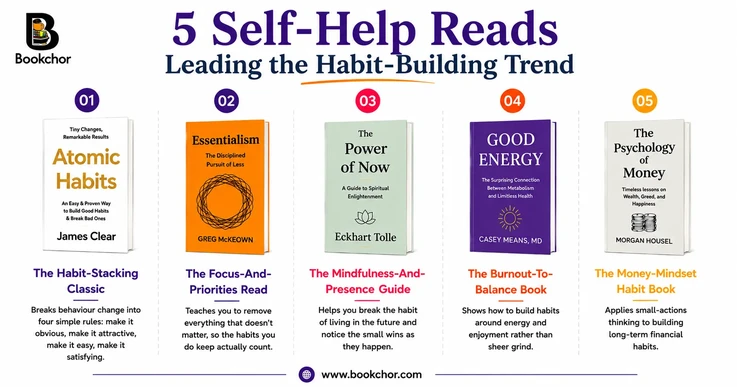
These are the titles readers keep coming back to easy to start, easy to apply, and genuinely useful even on a second or third read.
1. The habit-stacking classic The book that started this entire wave. Breaks behaviour change into four simple rules: make it obvious, make it attractive, make it easy, make it satisfying. If you only read one book from this list, start here.
2. The focus-and-priorities read For readers who feel busy but not productive. Instead of adding more habits, this one teaches you to remove everything that doesn't matter, so the habits you do keep actually count.
3. The mindfulness-and-presence guide Useful for breaking the habit of living three steps ahead of yourself. Pairs well with habit-tracking because it teaches you to actually notice the small wins as they happen.
4. The burnout-to-balance book Written for people who tried discipline and burned out instead. Shows how to build habits around energy and enjoyment rather than sheer grind.
5. The money-mindset habit book Habit-building isn't just about waking up early this one applies the same small-actions philosophy to building long-term financial habits.
Early Signs You're Ready for a Habit-Building Book (Not Just Another Motivational Read)
Most readers don't realise they're stuck in the "motivation loop" until they've bought their fifth self-help book this year and changed nothing. A few signs this category is exactly what you need right now:
- You've started the same routine multiple times but never made it past week two
- You feel like you need more willpower, not a better system
- Your "good days" depend entirely on your mood
- You've highlighted a dozen self-help books but applied almost none of it
- You want progress that doesn't require constant motivation to maintain
If most of this sounds familiar, a habit-focused read will do more for you right now than another big-picture mindset book.
When a Self-Help Book Isn't Enough on Its Own
No book however good fixes anything by itself. Habit-building only works when it's applied slowly, one system at a time, rather than read cover-to-cover and shelved. If you finish a book and try to change ten habits overnight, you'll likely abandon all ten within a week. Pick one habit, apply it for a month, then move to the next book or the next idea.
This is also why re-reading matters in this genre more than most. A habit book read once during a busy month barely registers. Read again when you actually have the headspace to apply it, the same pages hit very differently.
Build Your 2026 Self-Help Shelf Without Overspending
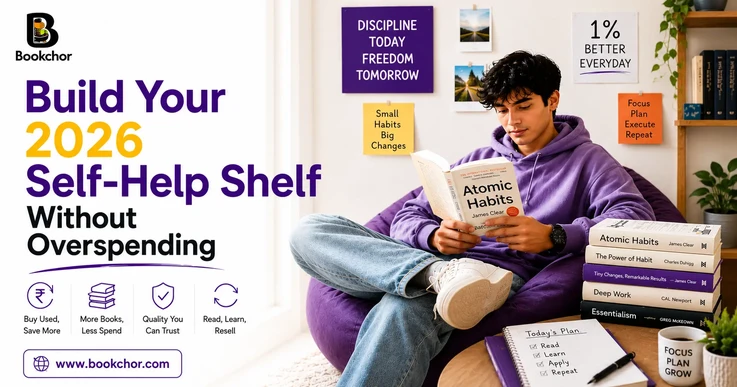
Here's the part most reading lists skip: these books are genuinely worth owning, but full retail price for five to six titles adds up fast, especially when you're not sure which ones will actually click for you.
That's exactly where buying second-hand makes sense. On Bookchor, you can:
- Buy used self-help books in Like New, Very Good, or Good condition at a fraction of the price
- Build your entire habit-building shelf for what one new book would normally cost
- Try multiple titles risk-free instead of betting on one expensive pick
- Resell or exchange once you've applied the lessons and want to move to the next category
2026's self-help trend isn't about owning more books, it's about applying fewer ideas, more consistently. Buying used means you can experiment with the right titles without the cost being the reason you didn't start.
Quick tips before you buy used:
- Check the listed condition (before adding to cart
- Confirm edition and author name match what you're looking for
- Bundle multiple titles together to save further on shipping
Start your 2026 habit-building shelf today browse second-hand self-help books on Bookchor and build a system, not just a reading list.
FAQs
Is it okay to buy second hand self-help books?
Yes. Condition is graded clearly and the content doesn't change only the price does.
Are used books cheaper than new ones on Bookchor?
Yes, pre-owned books typically cost a fraction of the retail price while staying fully readable.
Which habit-building book should a beginner start with?
Start with one foundational habits book, apply it for a month, then move to the next title instead of buying several at once.